Jacob Lief
CEO & Founder, Ubuntu Pathways
Jacob Lief is a social entrepreneur who reimagined how philanthropy works by creating a new way of ending the poverty cycle. The nonprofit he co-founded helps stabilize and educate children in South Africa’s poorest townships, starting from birth and every day after.
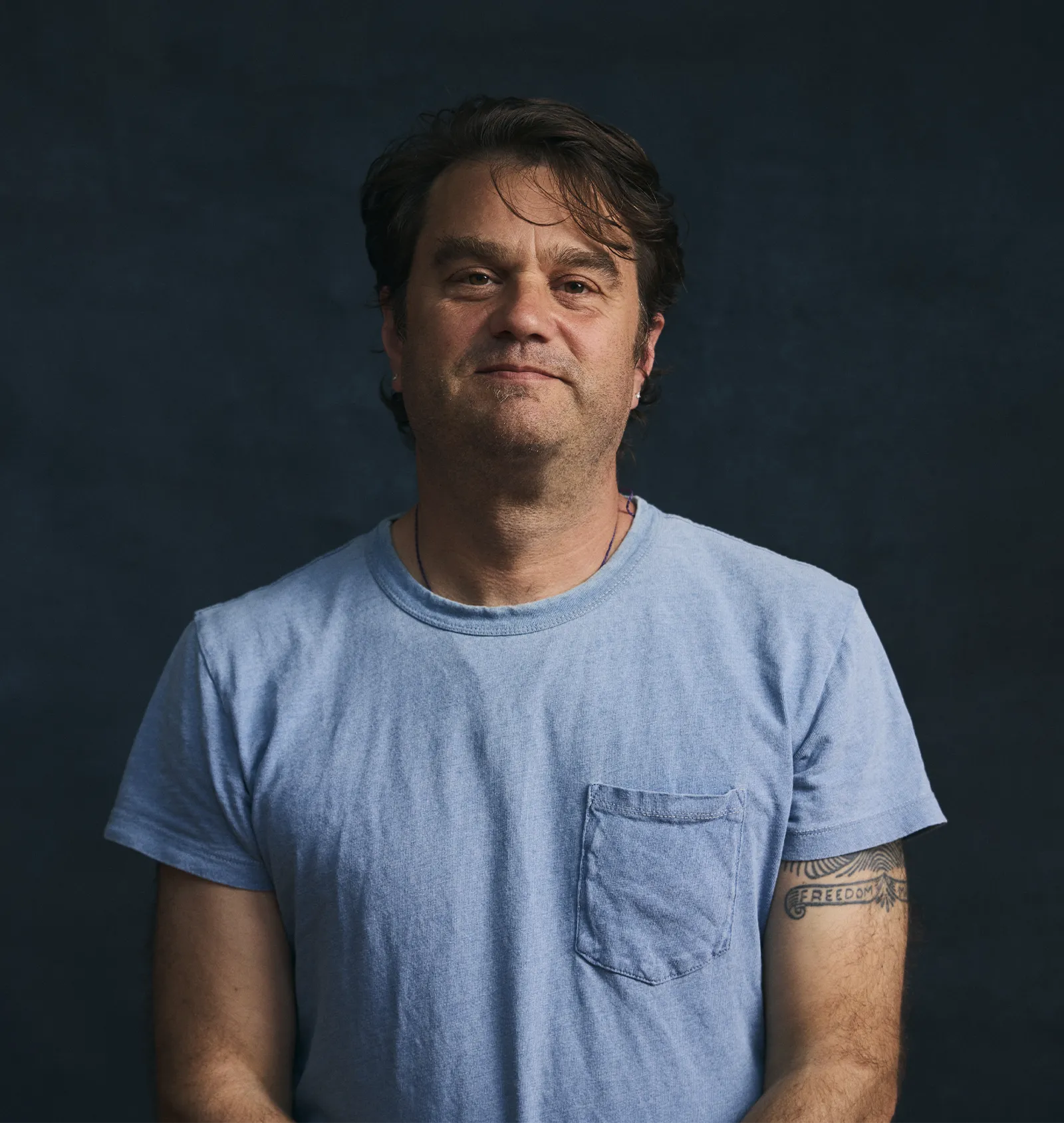
“Go smaller than you think you should. The world doesn’t change at that altitude. It changes one child, one relationship, one township at a time.”
CONVERSATION
Q:
Why did you start Ubuntu Pathways?
JACOB
Honestly, I didn’t set out to start anything. In 1997 I was a university student who came to South Africa thinking I understood the world. Through a series of events I ended up in a shebeen in New Brighton, and a man named Banks Gwaxula waved me over. We sat late into the night sharing beers, talking football and education. That evening I moved in with his family, and I spent the next six months living with him and working at the school where he taught, Emfundweni Primary.
Banks took a young American who thought he had the world figured out and taught him what Ubuntu actually means, that for all our differences of race and upbringing, we had far more in common than not. I grew up in comfort, two parents, in New Jersey; it was honestly harder for me to fail than to succeed. And here were children with every bit of my curiosity and drive, whose only disadvantage was where they’d been born. That gap, between what I’d been handed and what they’d been denied, was the thing I couldn’t walk away from.
So a year later, Banks and I started Ubuntu. Not because we had a grand plan, but because we couldn’t accept that a child’s birthplace should decide the whole of their life. Every miracle you see on our campus flows from that first conversation, and from Banks’s refusal to leave any child behind.
Banks took a young American who thought he had the world figured out and taught him what Ubuntu actually means, that for all our differences of race and upbringing, we had far more in common than not. I grew up in comfort, two parents, in New Jersey; it was honestly harder for me to fail than to succeed. And here were children with every bit of my curiosity and drive, whose only disadvantage was where they’d been born. That gap, between what I’d been handed and what they’d been denied, was the thing I couldn’t walk away from.
So a year later, Banks and I started Ubuntu. Not because we had a grand plan, but because we couldn’t accept that a child’s birthplace should decide the whole of their life. Every miracle you see on our campus flows from that first conversation, and from Banks’s refusal to leave any child behind.
Q:
In your own words, what is Ubuntu Pathways about?
JACOB
What we do at Ubuntu is, in many ways, what you do for your own children, what I do for mine. We just do it in much tougher circumstances, and it takes a lot. For 27 years I’ve said that raising children isn’t scalable. What works for one child doesn’t work for another. My two boys are completely different; your children are different; every child needs their own pathway. So we built a model that takes a vulnerable child from cradle to career. We start with a pregnant mom and make sure of a healthy birth, we’re proud of our 100% success rate in preventing HIV from passing from mother to child, so a generation of children in Zwide is being born with a clean slate. From there we walk beside them every single day of their lives: medical care, education, psychosocial support, a stable home. As they approach 18 we split into two tracks, university and vocational, but the goal is the same for every child regardless of track, stable health, a stable home, a real way out of poverty.
That’s the whole of it. Not a program you graduate out of, a relationship. There is no exit strategy for raising a child; for better or worse, they’re yours forever. Ubuntu means “I am because you are."
We’re just trying to live that, one child at a time, and to prove every day that your birthplace should not determine your future.
That’s the whole of it. Not a program you graduate out of, a relationship. There is no exit strategy for raising a child; for better or worse, they’re yours forever. Ubuntu means “I am because you are."
We’re just trying to live that, one child at a time, and to prove every day that your birthplace should not determine your future.
Q:
This shift from a short-term “numbers and reach” approach to personal, long-term care sounds more like parenting than philanthropy. How did people react, and how has that reaction changed over time?
JACOB
I’ll be honest: in the early days we did it the other way. We chased reach. We measured ourselves by how many thousands we could touch with a workshop or a message, because that’s what the sector rewards and what funders wanted to hear. Then one day we looked hard at those numbers and admitted they weren’t changing lives. Touching a hundred thousand children for an afternoon is not the same as changing one child’s life.
So we did something that felt almost heretical: we went narrow and deep instead of wide and
shallow. We planted ourselves in one township and said we will walk with these children for as long as it takes. When we first said that out loud, a lot of people thought we were reckless, even irresponsible. Funders would ask, “How many kids per dollar?” and we’d say, “Fewer than you’d like, and for a lot longer than you’d like.” Some walked away. The whole logic of philanthropy is scale and exit, and here we were talking about permanence, about loving specific children by name.
What’s changed over 27 years is that the results answer the question for us. Recently I popped into our boardroom to greet the PwC team doing our annual audit, and a young accountant looked up and said, “Jake???” She wasn’t an auditor I’d met before, she was a former Ubuntu Scholar we’d known since she was a girl, now a chartered accountant taking our CFO to task over his spreadsheets. When that happens, the “cost per child” conversation kind of ends. Our donors stayed and invested because they came to Zwide, met our students, saw our model in action and understood that raising children is not scalable and there is no exit strategy.
So we did something that felt almost heretical: we went narrow and deep instead of wide and
shallow. We planted ourselves in one township and said we will walk with these children for as long as it takes. When we first said that out loud, a lot of people thought we were reckless, even irresponsible. Funders would ask, “How many kids per dollar?” and we’d say, “Fewer than you’d like, and for a lot longer than you’d like.” Some walked away. The whole logic of philanthropy is scale and exit, and here we were talking about permanence, about loving specific children by name.
What’s changed over 27 years is that the results answer the question for us. Recently I popped into our boardroom to greet the PwC team doing our annual audit, and a young accountant looked up and said, “Jake???” She wasn’t an auditor I’d met before, she was a former Ubuntu Scholar we’d known since she was a girl, now a chartered accountant taking our CFO to task over his spreadsheets. When that happens, the “cost per child” conversation kind of ends. Our donors stayed and invested because they came to Zwide, met our students, saw our model in action and understood that raising children is not scalable and there is no exit strategy.
Q:
Has the cradle-to-career model been adopted elsewhere, and how can we help get this way of thinking used more widely?
JACOB
Yes and no, and I want to be careful here. The instinct to go deep and treat the whole child, health, education, home, all of it, over the long haul, is spreading, and you see cousins of it in place-based work around the world. What doesn’t travel easily is the very thing that makes it work: depth. Depth resists scale by definition. You cannot franchise a relationship.
So when people ask how to spread this, my answer isn’t “copy our campus.” It’s “steal the principles.” Pick a community and stay. Measure the outcomes that actually matter, is she healthy, does she have a stable home, is she standing on her own two feet at 25, not the vanity numbers. Refuse to design around an exit. And be willing to do fewer things for more people over more years, which is the opposite of what nearly every incentive in this field pushes you toward. Where you can help is in changing that incentive structure. We keep our doors open, we share our model, our data, and our mistakes, because the more that funders and governments reward depth and patience over reach and speed, the more room there is for this way of thinking to take root. If you want to move it forward, come and see it for yourself, and then go tell the people who hold the purse strings that permanence is a better bet than scale.
So when people ask how to spread this, my answer isn’t “copy our campus.” It’s “steal the principles.” Pick a community and stay. Measure the outcomes that actually matter, is she healthy, does she have a stable home, is she standing on her own two feet at 25, not the vanity numbers. Refuse to design around an exit. And be willing to do fewer things for more people over more years, which is the opposite of what nearly every incentive in this field pushes you toward. Where you can help is in changing that incentive structure. We keep our doors open, we share our model, our data, and our mistakes, because the more that funders and governments reward depth and patience over reach and speed, the more room there is for this way of thinking to take root. If you want to move it forward, come and see it for yourself, and then go tell the people who hold the purse strings that permanence is a better bet than scale.
Q:
What is the one thought or idea that keeps you going?
JACOB
The young accountant who looked up from her spreadsheet and said, “Jake???” She’d lost her parents young and grown up with her aunt, shy, reserved, but always top of her maths class. And there she was, fifteen years later, auditing the very organization that had raised her. Then she asked if she could come back and mentor our current students.
That’s the thought that keeps me going. Not that she succeeded, that she came back. Somewhere along the way she understood that her success wasn’t only hers; it belonged to the next child who would need it. That’s Ubuntu completing its circle. And it isn’t only the children, it’s our team. Success at Ubuntu never happens by accident; it happens because our staff, the nurses, doctors, teachers, social workers, and psychologists, show up every single day, no matter what crisis the world sends us. They held families together through the height of the AIDS pandemic, turned our campus into a feeding and vaccine centre during COVID, and steadied our community through the USAID cuts. They are the ones doing the actual walking, and they keep me going as much as anything.
So when I’m tired, or when the world throws the next crisis at us, I hold onto the simple conviction underneath all of it: our children deserve what all children deserve, everything, every day.
That’s the thought that keeps me going. Not that she succeeded, that she came back. Somewhere along the way she understood that her success wasn’t only hers; it belonged to the next child who would need it. That’s Ubuntu completing its circle. And it isn’t only the children, it’s our team. Success at Ubuntu never happens by accident; it happens because our staff, the nurses, doctors, teachers, social workers, and psychologists, show up every single day, no matter what crisis the world sends us. They held families together through the height of the AIDS pandemic, turned our campus into a feeding and vaccine centre during COVID, and steadied our community through the USAID cuts. They are the ones doing the actual walking, and they keep me going as much as anything.
So when I’m tired, or when the world throws the next crisis at us, I hold onto the simple conviction underneath all of it: our children deserve what all children deserve, everything, every day.
Q:
What have you learned about people along the way?
JACOB
That we are far more alike than we are different. That’s the first thing Banks taught me in that shebeen, and 27 years have only proven it to be true. I’ve watched children come to us abused and orphaned who are now performing surgery in the country’s top hospitals, writing code for new innovations, working the factory lines of the Eastern Cape, and dressing models for some of the world’s top fashion brands. The talent was never in question. The only variable was whether someone showed up.
I’ve also learned that people rise to the level of what you believe about them. Leaving a child on their own is humanity at its worst; nurturing one, truly investing in one, is humanity at its finest, and most people, given the chance, want to be on the finest side of that line. Again and again, people have been more generous than the world told me to expect: our donors, our staff, and a schoolteacher in a township who once took in a young American he’d never met.And I’ve learned that no one wants to be a number. People want to be known. That’s true of the children, and it’s true of everyone who has ever helped us. The whole thing runs on being known.
I’ve also learned that people rise to the level of what you believe about them. Leaving a child on their own is humanity at its worst; nurturing one, truly investing in one, is humanity at its finest, and most people, given the chance, want to be on the finest side of that line. Again and again, people have been more generous than the world told me to expect: our donors, our staff, and a schoolteacher in a township who once took in a young American he’d never met.And I’ve learned that no one wants to be a number. People want to be known. That’s true of the children, and it’s true of everyone who has ever helped us. The whole thing runs on being known.
Q:
What would you say to people who want to change the world for the better?
JACOB
Go smaller than you think you should. The freedom to dream is an incredible privilege, and if you have it, the temptation is to dream big and wide — to fix everything for everyone. But the world doesn’t change at that altitude. It changes one child, one relationship, one township at a time. Pick something and don’t leave. The hard part of this work was never the starting; it’s the staying, showing up every single day, no matter what crisis comes, for decades. That’s not glamorous and it won’t trend, but it’s the only thing I’ve ever seen actually work. There is nothing more sustainable than investing in a person every day of their life, and there is no exit strategy for that kind of love.
And find your Banks. I came to South Africa certain I understood the world, and the most important thing I ever did was let someone from a completely different life show me how little I knew. Change starts the moment you’re willing to sit down, share a drink, and discover you have more in common than you were ever told.
Then come to visit the Ubuntu Campus. I promise you’ll be inspired.
And find your Banks. I came to South Africa certain I understood the world, and the most important thing I ever did was let someone from a completely different life show me how little I knew. Change starts the moment you’re willing to sit down, share a drink, and discover you have more in common than you were ever told.
Then come to visit the Ubuntu Campus. I promise you’ll be inspired.