Katharina Harf
Executive Chairwoman, DKMS US
Lorem ipsum dolor sit amet, consectetur adipiscing elit, sed do eiusmod tempor incididunt ut labore et dolore magna aliqua. Ut enim ad minim veniam, quis nostrud exercitation ullamco laboris nisi ut aliquip ex ea commodo consequat. Duis aute irure dolor in reprehenderit in voluptate velit esse cillum dolore eu fugiat nulla pariatur. Excepteur sint occaecat cupidatat non proident, sunt in culpa qui officia deserunt mollit anim id est laborum.
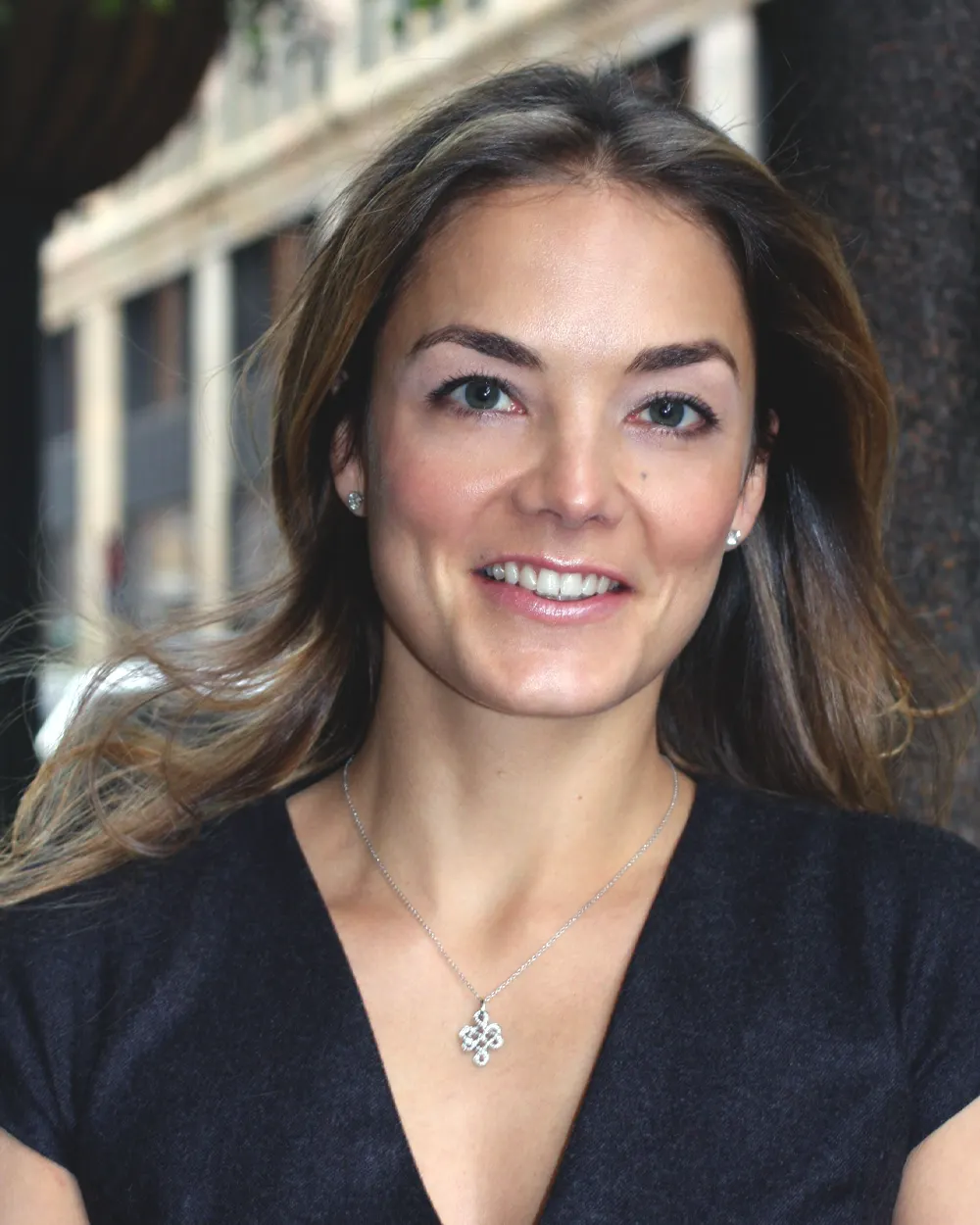
There is truly no greater experience than watching two strangers greeting each other like long lost family.
CONVERSATION
Q:
Why did you start DKMS?
KATHARINA
My mother is the inspiration behind DKMS and my families’ lifelong fight against blood cancer. Thirty years ago, she was diagnosed with leukemia and her only hope was a blood stem cell transplant. With no matching donor in our family, we literally moved mountains to find a match for her, increasing the donor pool in Germany from 3,000 to 68,000 in a single year. Despite our best efforts, she ultimately lost her battle. Before she passed away though, she made my father promise her that we would continue fighting for other patients, so no family would have to go through what we experienced.
After founding DKMS in 1991, our family realized that to truly help all patients we would need to diversify the registry, and so I founded the first international branch of DKMS here in the US in 2004. This was the beginning of our internationalization efforts and DKMS now operates in seven countries, across five continents, ensuring we can meet the needs of patients across the globe. Driven by the promise we made to my mother, DKMS has continued to grow, with over 13 million registered donors and having given more than 135,000 patients a second chance at life.
After founding DKMS in 1991, our family realized that to truly help all patients we would need to diversify the registry, and so I founded the first international branch of DKMS here in the US in 2004. This was the beginning of our internationalization efforts and DKMS now operates in seven countries, across five continents, ensuring we can meet the needs of patients across the globe. Driven by the promise we made to my mother, DKMS has continued to grow, with over 13 million registered donors and having given more than 135,000 patients a second chance at life.
Q:
In your own words, what is DKMS about?
KATHARINA
DKMS is the largest donor center in the world, fighting blood cancers and blood disorders globally and shaping the future of science and research in the field of stem cell transplantation. Ultimately though, for me, DKMS is about believing in the fundamental goodness of people. Strangers helping strangers, out of nothing more than the kindness of their hearts. DKMS and our donors also underscore a simple, but beautiful truth about the world; we are all connected. Despite what may seem like vast and varied differences between us, donors and patient share a connection that is, literally, to the marrow. We all feel love and fear, joy and despair, and we all search for answers when confronted with a seemingly impossible situation. DKMS is that hope embodied.
Q:
What’s it like when you find out your database has found a match?
KATHARINA
It is one of the most moving moments imaginable. A match means that a stranger, guided by compassion, has quietly stepped forward to give someone else a chance at life. We recruit donors around the world every day in the hopes that they can save lives, but in the moment when a match is found that hope goes from something abstract to something tangible. A real person, along with their family and friends, has found their prayers answered. The pinnacle moment for all of us is when we get the opportunity to witness the miracle when a patient gets to finally meet the donor who saved their life for the first time. There is truly no greater experience than watching two strangers greeting each other like long lost family.For everyone at DKMS, this moment is also a reminder that what we do is not just administrative or strategic. It is sacred in its own way. Every registration, every campaign, even the smallest conversation can lead to this moment, where a patient hears the words they have been dreaming of: there is a match.
Q:
Why is it so rare to find a stem cell match?
KATHARINA
It is rare because the donor has to be a very close genetic match — almost like a twin. The unique genetic information that exists within different regions and countries means that patients around the world will likely only find a match with donors who share the HLA characteristics specific to those areas. Combined with the way our DNA has spread globally due to human migration, this makes the search incredibly difficult, because the right donor could be anywhere in the world. This is why building a huge global donor database is so important. We are essentially looking for a needle in a haystack, but we refuse to allow any obstacle, no matter how seemingly insurmountable, to stand in the way of our patients getting the second chance at life they deserve. If their matching donor exists, it is our duty to find them and bring hope to those families who are so desperately in need.
Q:
You’ve been fighting against blood cancer for a long time, what have you learned about people along the way?
KATHARINA
I have learned that everyday people are capable of extraordinary generosity. In a world that often feels divided and overwhelming, this is one of the clearest examples of compassion made real and what collective humanity can do. Despite what the media or political leaders may claim, our efforts and the people we work with are a constant reminder that people are fundamentally driven more by love than hate and are looking for ways to help each other.What always amazes me though is the extent to which the younger generation has shown a deep desire to help. Not only are they, medically speaking, the most preferred donors, but they have stepped up in a remarkable way without hesitation. With so much going on and what seems like an endless cascade of crises, we can see that younger people are looking for ways to effectively make a difference. As one young college student who donated recently said, “The feeling I get from my donation is that there is something right in this world and that I get to be a part of it. Having this connection is beyond anything I could have imagined.”
Q:
What does the future of DKMS and blood cancer treatment look like for you?
KATHARINA
My big dream is that every patient will be saved from blood cancer and other blood disorders. When they get sick, we have a solution for them; whether it’s a matching donor, our clinical trial research, or simply helping to provide access to transplantation. In this approach we see no borders, believing that everyone, everywhere, deserves a second chance at life. We will keep fighting for them by spreading the word, recruiting donors, raising money, and expanding our efforts in science, research, and access to treatment. Whatever it takes to make this dream a reality.